Wildebeest Migration in Maasai Mara and Serengeti: A Month-by-Month Guide
The Great Wildebeest Migration is a year-round cycle driven by rainfall and grazing needs. Understanding the movement from calving in the south to river crossings in the north allows travelers to plan the perfect safari and witness nature's most dramatic spectacle.
The Great Wildebeest Migration is often described as 'The Greatest Show on Earth,' and for good reason. Imagine over 1.5 million wildebeest, accompanied by hundreds of thousands of zebras and gazelles, moving in a thunderous, endless loop across the Serengeti ecosystem in Tanzania and the Maasai Mara in Kenya. It is a raw, visceral display of life, death, and survival.
Because the animals are constantly moving in search of greener pastures, timing is everything. To help you plan your bucket-list adventure, here is our month-by-month guide to tracking the herds.
January – March: The Calving Season (Southern Serengeti)
During these months, the herds settle in the short-grass plains of the southern Serengeti and the Ngorongoro Conservation Area. This is calving season. In a synchronized feat of nature, roughly 8,000 wildebeest are born every single day. While the sight of fluffy calves finding their feet is heartwarming, it also attracts high concentrations of lions, cheetahs, and hyenas. If you want to witness predator-prey interactions, this is the time to visit.
April – May: The Long Rains and Moving North
As the plains dry out, the herds begin their trek northwest. This period coincides with the "long rains." While some lodges close due to muddy roads, intrepid travelers are rewarded with lush green landscapes and significantly lower lodge rates. The herds are generally in the Central Serengeti (Seronera), moving toward the Western Corridor.
June – July: The Grumeti and the Great Trek
By June, the rains subside, and the wildebeest congregate in the Western Corridor. This is when they face their first major obstacle: the Grumeti River. While not as famous as the Mara River crossings, the Grumeti features massive crocodiles waiting for a meal. By July, the vanguard of the herd reaches the northern Serengeti and begins the journey into Kenya.
August – October: The Iconic Mara River Crossings
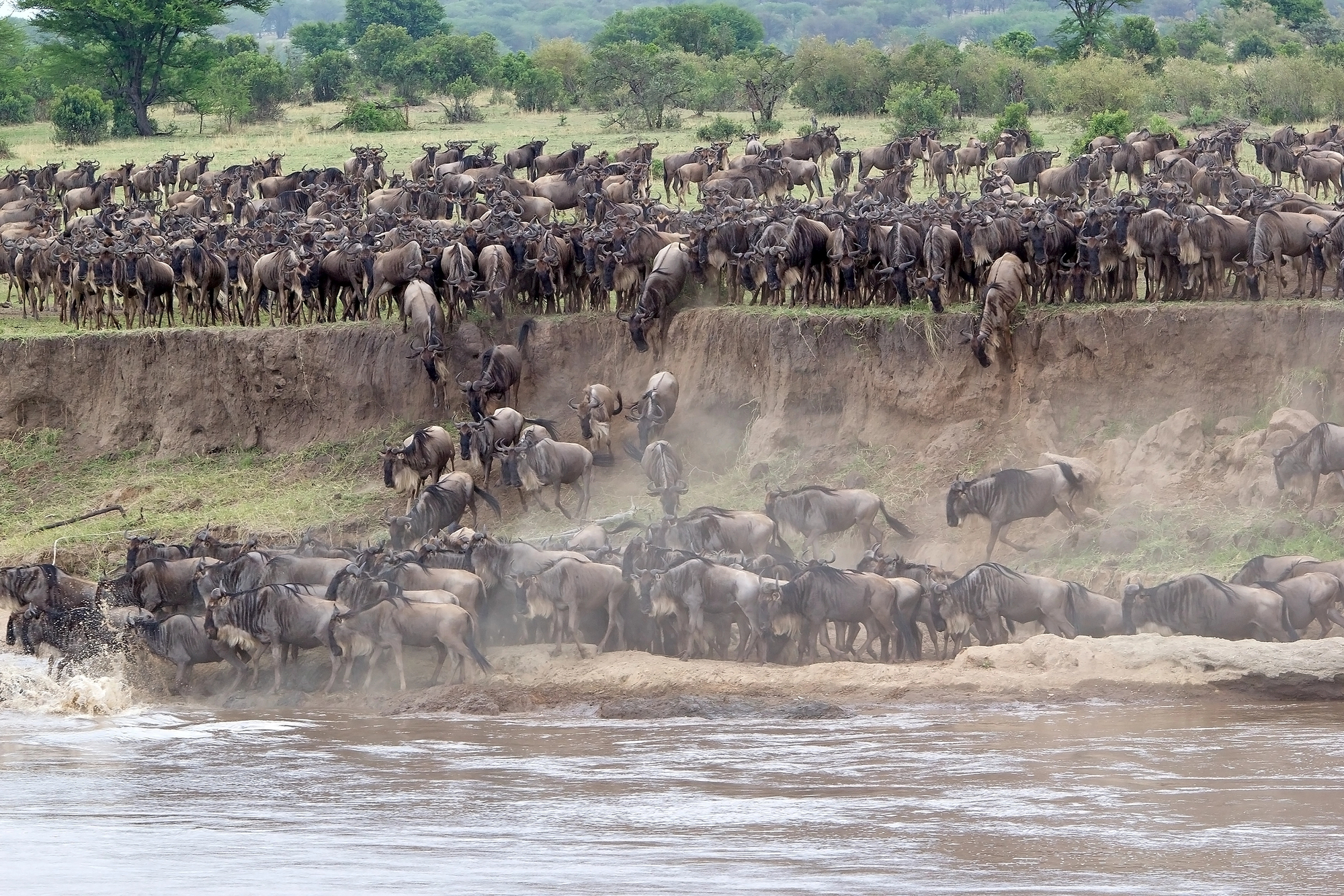
This is peak safari season. The herds are split between the northern Serengeti and Kenya's Maasai Mara. For many, the ultimate goal is to witness a Mara River crossing. Thousands of animals hurl themselves down steep embankments into crocodile-infested waters. It is chaotic, tragic, and exhilarating all at once. The Maasai Mara provides exceptional viewing during this time as the herds spread out across its golden plains.
November – December: The Return South
With the arrival of the "short rains," the herds sense the new grass growing in the south and begin their rapid descent back through the eastern Serengeti. They move quickly, covering vast distances in a matter of days, eventually returning to the southern plains to start the cycle all over again.
Practical Tips for Your Migration Safari:
1. Book Early: For the river crossing season (July-October), lodges often fill up a year in advance.
2. Stay Mobile: Consider a 'mobile tented camp' that moves along with the herds to ensure you are always in the heart of the action. 3. Bring Patience: Nature doesn’t follow a schedule. You might wait hours by a riverbank for a crossing that happens in minutes.
The Great Migration is a cycle that never ends, and no matter when you visit, there is a story to be told. Whether you want to see the vulnerability of new life in February or the high-octane drama of a river crossing in August, the Serengeti-Mara ecosystem remains the ultimate stage for the world’s most spectacular wildlife event.